On Roundness and Love. A Jewelry Manifesto
If you had to store all your love in one place, what shape would it be? I suspect something round.


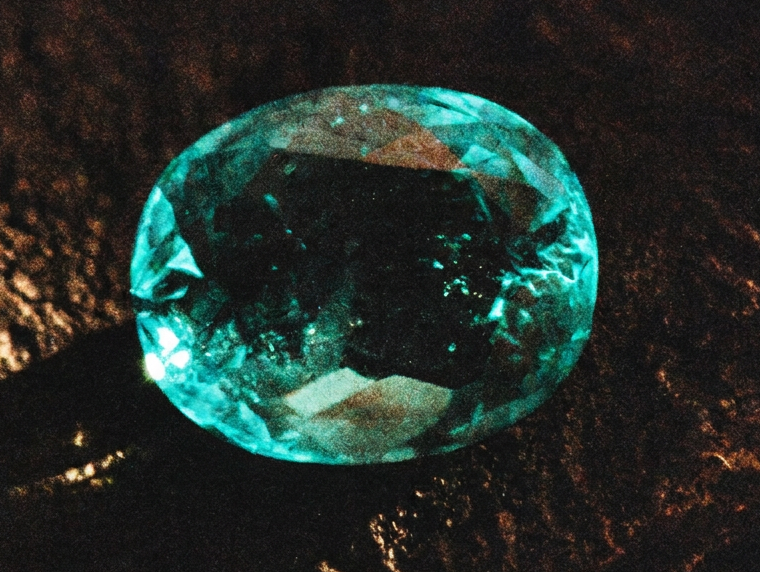
Colored gemstones are natural or lab-created stones — sapphires, rubies, emeralds, and beyond — used in fine jewelry as an intentional alternative to diamonds. In recent years, interest in colored stones has grown significantly, driven by a broader shift toward individuality and personal meaning in jewelry design.
This guide covers what colored gemstones are, the most important varieties, how to choose one, and why they are increasingly the choice of people who want their jewelry to carry real meaning — not just real value.
Colored gemstones are precious and semi-precious stones distinguished by their natural color rather than their transparency. Unlike diamonds — which are graded primarily on cut, clarity, carat, and color absence — colored gemstones are valued for the depth, saturation, and uniqueness of their color.
The three classic colored gemstones in fine jewelry are sapphire, ruby, and emerald. Each belongs to a different mineral family — and each speaks to a different kind of person.
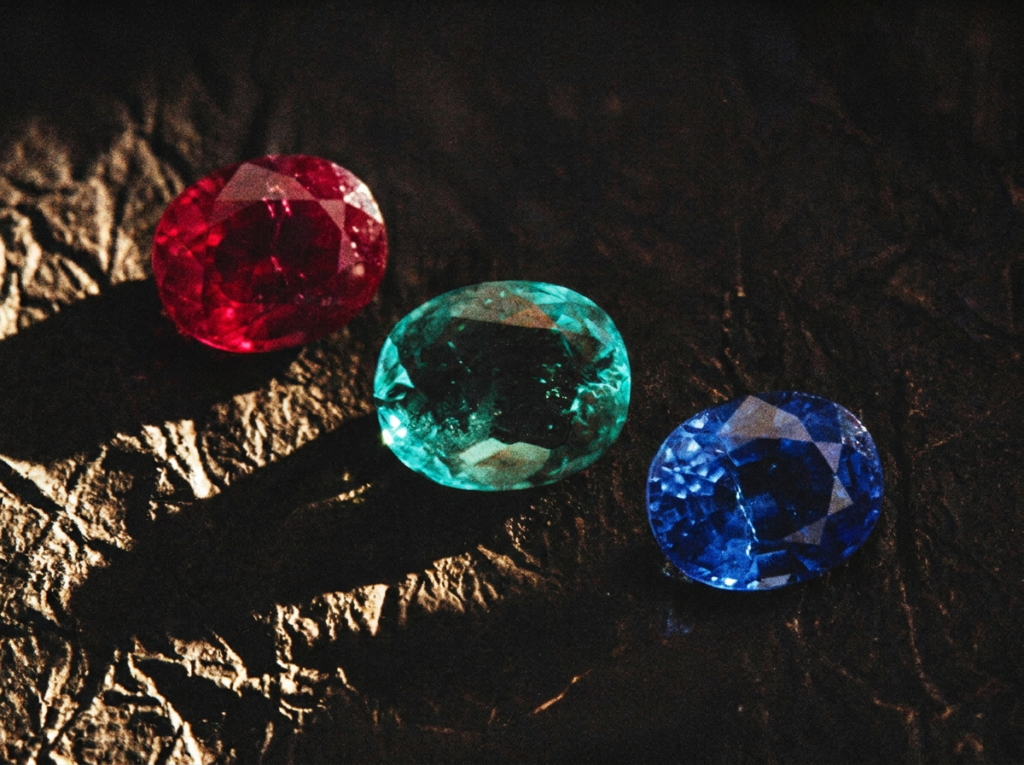
A sapphire is a variety of the mineral corundum, found in almost every color except red. Blue is the most well-known, but sapphires also occur naturally in teal, pink, peach, violet, yellow, and near-colorless white. The rarest variety is Padparadscha — a delicate salmon-pink stone found primarily in Sri Lanka — which is among the most coveted gemstones in contemporary fine jewelry.
Sapphires are rated 9 on the Mohs hardness scale, making them one of the most durable gemstones available and an excellent choice for everyday wear, including engagement rings.
What sapphire communicates: A point of view. The confidence to choose something that needs no explanation.
A ruby is also a variety of corundum — the same mineral family as sapphire — distinguished by its red color, caused by the presence of chromium. Fine natural rubies are among the rarest gemstones on earth. A high-quality Burmese ruby, displaying what jewelers call pigeon’s blood color — a deep, vivid red with a hint of blue — commands prices that frequently exceed comparable diamonds.
Unlike many gemstones, the value of a ruby is determined almost entirely by the intensity of its color. Saturation is everything. A stone that looks slightly muted in photographs can be breathtaking in person — and that gap is exactly where a skilled designer earns their place.
What ruby communicates: The kind of love that doesn’t need to be understated.
An emerald is a variety of the mineral beryl, colored green by trace amounts of chromium and vanadium. Nearly all natural emeralds contain internal inclusions — a characteristic internal landscape that jewelers call a jardin, from the French word for garden. Unlike diamonds, where inclusions are considered flaws, in emeralds they are considered proof of natural origin. A flawless emerald is extremely rare and treated with considerable suspicion by gemologists.
Emeralds rate 7.5–8 on the Mohs scale and require slightly more care than sapphires or rubies, but their visual depth is unmatched.
What emerald communicates: The understanding that something real is never perfect — and that’s precisely what makes it worth keeping.

The shift toward colored gemstones reflects a broader cultural movement away from default choices. As lab-grown diamonds became more widely available and more affordable, many buyers began seeking stones that felt genuinely one-of-a-kind — stones where no two are identical, where origin matters, and where the choice itself says something about the person wearing it.
A diamond, however beautiful, is a default. A colored gemstone is a decision.
This distinction is particularly significant in the engagement ring market, where more couples are choosing stones that reflect their specific story rather than following a conventional template.
The most important question when choosing a colored gemstone is not which stone is most popular right now, but which stone feels like the person who will wear it. Color carries emotional weight. Consider what the stone communicates before considering its technical properties.
In colored gemstones, color is the primary value driver — more so than carat weight or clarity. The key factors are hue (the base color), tone (how light or dark), and saturation (how vivid or muted). A smaller stone with exceptional saturation will almost always be more valuable and more beautiful than a larger stone with flat or uneven color.
For rings worn daily, sapphire (Mohs 9) and ruby (Mohs 9) are the most practical choices. Emeralds (Mohs 7.5–8) are better suited to pieces worn occasionally, or protected settings.
Colored gemstones require a different design sensibility than diamonds. The setting, metal color, and surrounding stones must be chosen to enhance — not compete with — the color of the central stone. This is where the expertise of the designer becomes critical.
At Kholdina Studio, colored gemstones come up in almost every bespoke conversation — not because we push them, but because once a client starts thinking about what they actually want to say with a piece of jewelry, a colored stone often becomes the most honest answer.
The process of choosing one is different from choosing a diamond. It requires an opinion. It requires knowing — or being willing to discover — something specific about yourself, or about the person you’re designing for. That conversation, uncomfortable as it sometimes is, is where the most meaningful jewelry begins.
Every bespoke piece starts with a single question: what story does this need to tell? A colored gemstone, chosen deliberately, is often the clearest way to answer it.
Wondering what your stone would be? Start here →
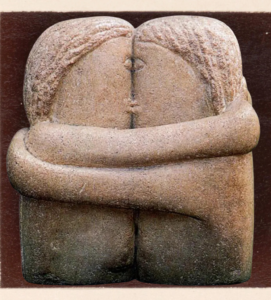
If you had to store all your love in one place, what shape would it be? I suspect something round.

[Part 2] Gold was worn before it was spent. That distinction still matters.
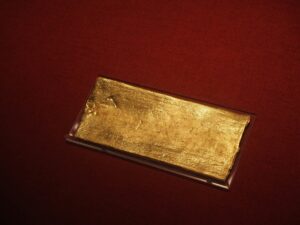
[Part 1] A woman walks into a gold shop in downtown Los Angeles carrying a small velvet pouch.