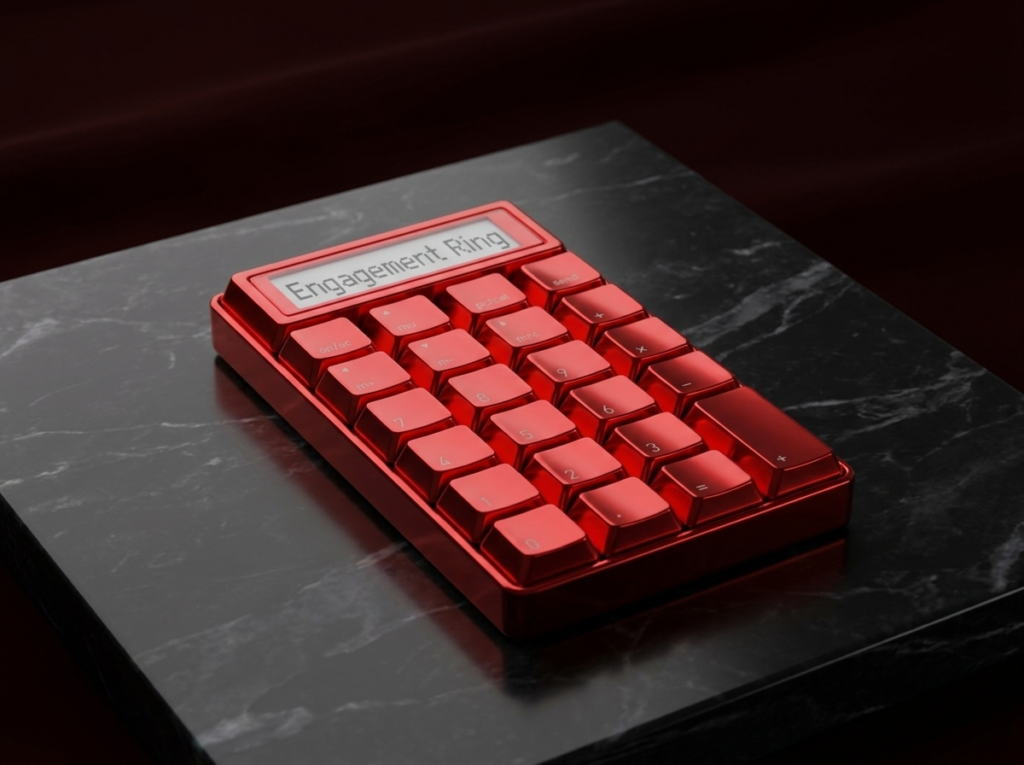
The “3-month rule” for rings is the idea that an engagement ring should cost about three months of the proposer’s salary. It isn’t a tradition, and it isn’t a financial guideline. It’s a marketing line invented by De Beers in the 1930s — later stretched to three months’ salary by the 1980s — built on one premise: the more you spend, the more you love.
It worked for a long time because it gave people a number when they had none. But it was never really about love. It was about volume — moving bigger, brighter diamonds by turning price into a stand-in for commitment.
That premise doesn’t hold up anymore, and not because people love each other less. It’s because what a ring is supposed to say has changed.
Rare, not loud
For decades, “impressive” meant big and bright: the largest stone the budget allowed, cut for maximum sparkle, chosen to be recognized at a glance. That’s a language built for other people to read — an audience, not a partner.
Today, the women choosing their own rings — whether picking it out themselves, guiding a partner toward it, or designing it entirely from scratch — are asking a different question. Not how much did this cost, but how well does this tell our story. Not will people notice this ring, but does this ring sound like me.
That shift opens the door past diamonds entirely. A sapphire chosen for its color instead of its carat. A stone with history. A cut nobody else in the room is wearing. An engraving, an asymmetry, a detail that only means something to the two people who know why it’s there. None of that shows up on a price tag. It’s rarity measured in specificity, not size — and it can’t be faked with a bigger stone, because it isn’t about the stone at all. It’s about whether the piece was actually made for someone, not selected for everyone.
That’s the real alternative to the 3-month rule. Not a smaller budget, not a cheaper diamond — a completely different measure of value, one where refinement and meaning outrank size and price every time.
A ring that lives with you
There’s a second shift the old rule never accounted for: rings used to come out for occasions. Now they don’t come off.
Engagement rings have become part of how women dress, not a separate category reserved for the “important” moments. That changes what actually matters when choosing one. A ring worn daily has to hold up against a keyboard, a gym bag, a dozen sweater sleeves a week — durability isn’t an afterthought, it’s a design requirement. It has to sit comfortably against other jewelry, not compete with everything else on your hand. And it has to fit a wardrobe that shifts by the day, not just the one outfit it was unveiled in.
None of that is solved by spending three months’ salary on a bigger stone. It’s solved by thinking about the ring the way you’d think about any piece you plan to wear for the rest of your life: does it work with how you actually live, not just how you looked the day it was given.
Choosing your own standard
The 3-month rule gave people a number so they wouldn’t have to think. But a ring that’s actually meant to last a lifetime deserves more thought than a formula can offer — what stone, what story, what details, what daily life it needs to survive.
That’s a harder question than “how much should I spend,” and a much better one. If you’re sitting with it — whether you’re choosing a ring for yourself or guiding someone else toward the right one — that’s exactly the conversation our engagement ring consultancy with Yulia is built for: two sessions to work through what actually matters to you, ending with a personal guide you can use or hand to someone else.
Because the right ring was never about the number on the receipt. It was always about whether it’s unmistakably, specifically yours.
Book a free consultation now →